

.png)
Problem
Unstable processes require constant manual intervention and respond too slowly to changes (e.g., fluctuations in material).

Solution
OSPHIM combines sampling, anomaly detection, and continuous optimization into a closed-loop system.

Result
Reliable processes with minimal intervention—even under variable conditions such as those involving PCR materials.

RESULT
Designed for Challenging Material like PCR
Processes involving post-consumer recycled materials are particularly sensitive to variability. OSPHIM enables stable production despite fluctuating material properties in the publicly funded project KUmpAInion.
Compensation of material variability
Continuous adaptation of process parameters
Increased feasibility of sustainable materials
SOLUTION
Closed-Loop Process Optimization
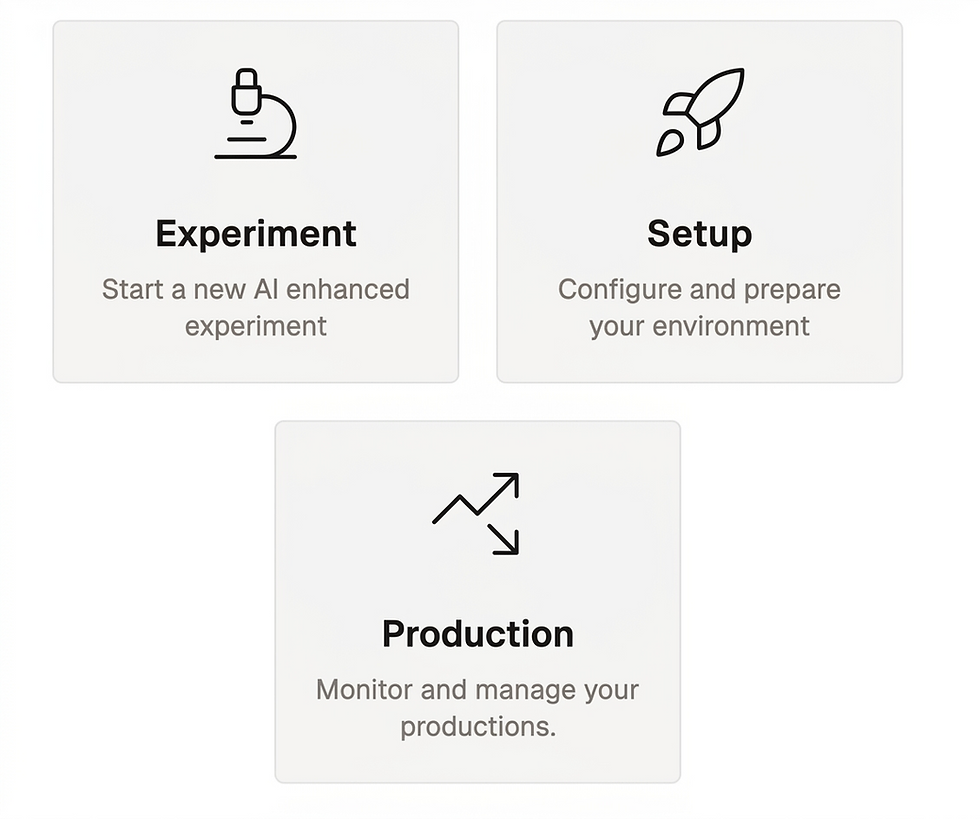
OSPHIM connects all phases of process optimization in one platform – from initial setup to real-time monitoring and adaptive optimization.
Data-driven setup via Experimentation Manager
Continuous monitoring with anomaly detection
Evaluation of quality relevance
Automated optimization strategies in parallel to production

PROBLEM
Processes Drift – Especially with Variable Materials
Material variations, especially with PCR materials, and varying conditions lead to continuous drift and require frequent manual adjustments.
Frequent manual intervention required
Process stability depends on operator experience
Material variability causes unpredictable behavior
Delayed reactions lead to scrap and inefficiency

BUSINESS IMPACT
From Reactive to Autonomous Production
Instead of reacting to process deviations, companies can proactively stabilize their production and reduce dependency on operator intervention.
Reduced operator workload
Higher consistency across shifts
Improved efficiency in challenging processes
Better handling of PCR and variable materials
Supported by Public Research
This approach is being developed and validated in the research project KumpAInion. We extend our thanks to the European Union as well as the Ministry of Economic Affairs, Industry, Climate Protection, and Energy of the State of North Rhine-Westphalia

